About this episode
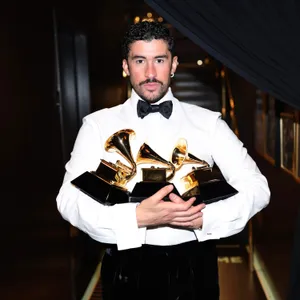
How Bad Bunny became the global voice of a generation in crisis — and what it means when resistance becomes profitable.<br/><br/><strong>Guests</strong>:<br/><br/><strong>Carina Del Valle Schorske</strong>, writer, translator and wannabe backup dancer. She wrote a <em>New York Times Magazine</em> profile about Bad Bunny you can read <u><a href="https://www.nytimes.com/interactive/2020/10/07/magazine/bad-bunny.html"target="_blank" >here</a></u>. <br/><br/><strong>Vanessa Díaz</strong>, professor of Chicano/a and Latino/a Studies at Loyola Marymount University. She’s been teaching a Bad Bunny college course 2023 and is the co-creator of the Bad Bunny Syllabus Project. She is also the co-author of <u><em><a href="https://www.dukeupress.edu/p-fkn-r"target="_blank" >P FKN R: How Bad Bunny Became the Voice of Puerto Rican Resistance</a></em></u>. <br/><br/><strong>Jorell Meléndez-Badillo</strong>, professor of Puerto Rican, Caribbean and Latin American History at University of Wisconsin, Madison. He’s the author of <u><em><a href="https://press.princeton.edu/books/hardcover/9780691231273/puerto-rico?srsltid=AfmBOoqo6KmNFPoVxC_cvo54bPA2MxlpAsxie8Hhrc7Qh9nbWgwM-iHx"target="_blank" >Puerto Rico: A National History.</a></em></u><em> </em>He is also the author of the history visualizers for Bad Bunny’s DTMF album.<br/><br/><em>To access bonus episodes and listen to Throughline sponsor-free, subscribe to Throughline+ via Apple Podcasts or at <a href="plus.npr.org/throughline"target="_blank" >plus.npr.org/throughline</a>.</em><br/><br/>See <a href="https://pcm.adswizz.com">pcm.adswizz.com</a> for information about our collection and use of personal data for sponsorship and to manage your podcast sponsorship preferences.<br/><br/><a href="https://www.npr.org/about-npr/179878450/privacy-policy">NPR Privacy Policy</a>