About this episode
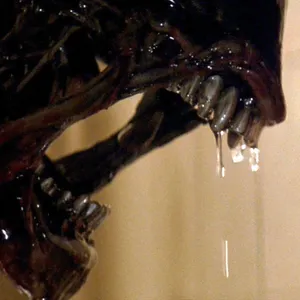
Maybe the real monster in the Alien franchise isn’t actually the killer alien. Because behind the acid blood and jump scares is an even more insidious horror: a single employer with unchecked power. That employer is named Weyland-Yutani, a mega-corporation that dominates workers across the galaxy.<br/><br/>Weyland-Yutani is a sort of extreme example of what economists call a monopsony — when one employer dominates a labor market and gains power to underpay and mistreat workers. Sure, it’s science fiction. But a growing number of economists argue that monopsony power is a much bigger deal in the real world than previously thought.<br/><br/>We watch scenes from the movie <em>Alien</em> with labor economist Arin Dube, whose new book, <em>The Wage Standard</em>, shines a spotlight on the problem of monopsony power in the modern economy. We ask Arin what policy ideas he has that would have maybe prevented the worker tragedy seen in <em>Alien</em>. And we use his answer to try and rewrite the movie (spoiler: the movie becomes <em>much</em> shorter and less exciting).<br/><br/>Plus, we speak with Fede Álvarez, the director and co-writer of <em>Alien: Romulus</em>, which puts Weyland-Yutani’s poor treatment of workers front row and center.<br/><br/><strong><em>For more on monopsony and anti-trust:</em></strong><br><ul class="rte2-style-ul" style="margin-top:0;margin-bottom:0;padding-inline-start:48px;"><li><a href="https://www.npr.org/sections/planet-money/2026/04/14/g-s1-117075/the-labor-economics-of-alien-and-its-lessons-for-inequality-on-earth"target="_blank" >The labor economics of 'Alien' — and its lessons for inequality on Earth</a> (PM newsletter)</li><li><a href="https://www.npr.org/sections/planet-money/2026/04/21/g-s1-118071/the-hidden-power-keeping-wages-low"target="_blank" >The hidden power keeping wages low</a> (PM newsletter)</li><li><a href="https://www.npr.org/sections/money/2019/03/20/704426033/antitrust-in-america"target="_blank" >Antitrust In America</a> (PM series)</li><li><a href="https://www.npr.org/2026/05/06/nx-s1-5812912/baseball-free-agency-curt-flood"target="_blank" >How we got free agents in baseball</a> (PM episode)</li></ul><br><em>Support:</em><br><ul class="rte2-style-ul" style="margin-top:0;margin-bottom:0;padding-inline-start:48px;"><li><a href="https://n.pr/3HlREPz"target="_blank" ><em>Planet Money+</em></a></li></ul><br><em>Read: </em><br><ul class="rte2-style-ul" style="margin-top:0;margin-bottom:0;padding-inline-start:48px;"><li><em>Our book: </em><a href="https://lnk.to/i3AukBdD"target="_blank" ><em>Planet Money: A Guide to the Economic Forces That Shape Your Life</em></a><em> </em></li><li><em>Our weekly longform </em><a href="https://n.pr/3zrFvUB"target="_blank" ><em>Planet Money newsletter</em></a></li><li><em>Our weekly </em><a href="https://www.npr.org/newsletter/indicator"target="_blank" ><em>Indicator round-up newsletter</em></a></li></ul><br><em>Follow: </em><br><ul class="rte2-style-ul" style="margin-top:0;margin-bottom:0;padding-inline-start:48px;"><li><a href="https://n.pr/3FqLuws"target="_blank" ><em>Instagram</em></a></li><li><a href="https://n.pr/3sGZdrq"target="_blank" ><em>TikTok</em></a></li><li><a href="https://lnk.to/iCVDaW3C"target="_blank" ><em>YouTube</em></a></li><li><a href="https://n.pr/3h92GwS"target="_blank" ><em>Facebook</em></a></li></ul><br><em>Today's episode of Planet Money was hosted by Greg Rosalsky and Kenny Malone. It was produced by James Sneed, edited by Jess Jiang, fact-checked by Sierra Juarez, and engineered by Robert Rodriguez. Our executive producer is Alex Goldmark.</em><br/><br/>See <a href="https://pcm.adswizz.com">pcm.adswizz.com</a> for information about our collection and use of personal data for sponsorship and to manage your podcast sponsorship preferences.<br/><br/><a href="https://www.npr.org/about-npr/179878450/privacy-policy">NPR Privacy Policy</a>